Homer
About
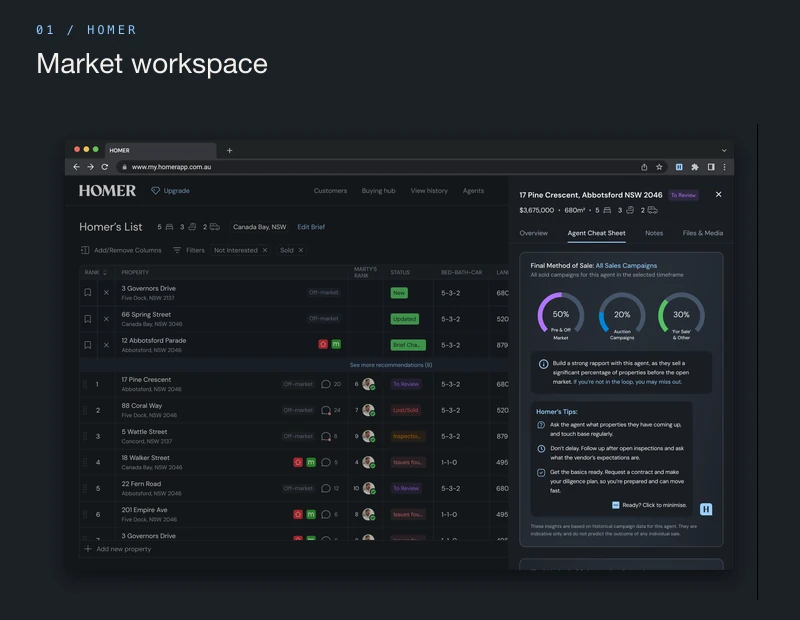
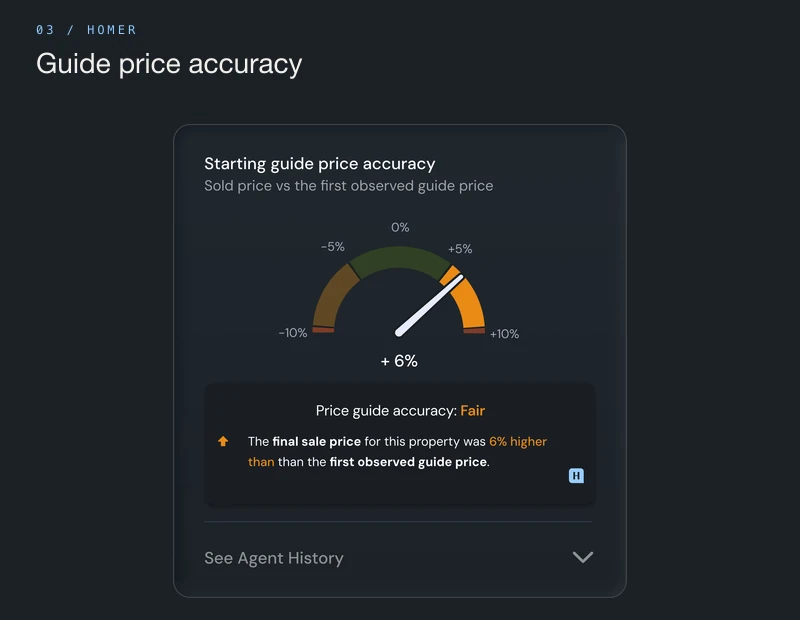
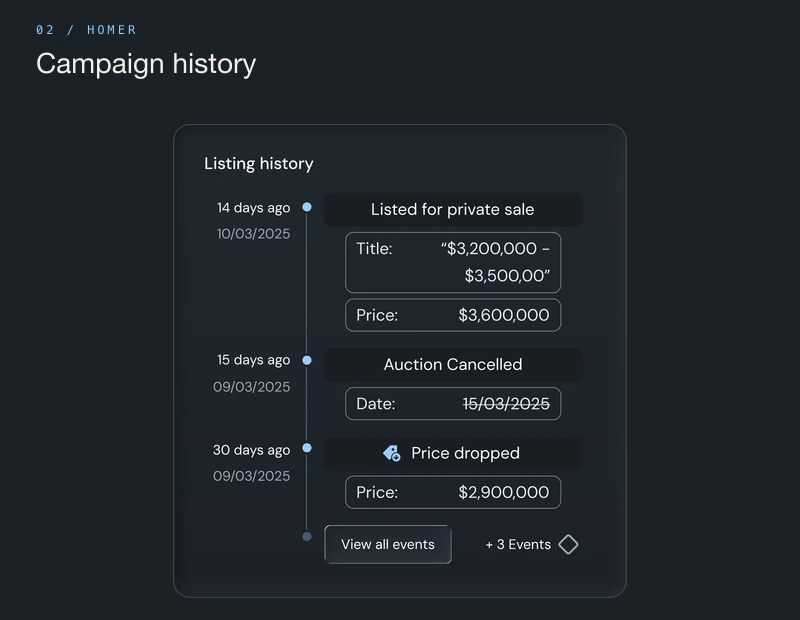
Homer is the transparency layer for Australian property. Portals show you a listing. Homer shows you the campaign: how the price moved, what changed, and whether the story on the page matches the one in the data.
It started in 2020 as KoalaData, a Chrome extension that put pricing insight next to the portals people already used. Tens of thousands of buyers came through that first product. The rebrand to Homer is the next step: the same bet on making the market’s data public, built out into a full product instead of a layer on someone else’s page. More than 21,000 people use it each week.
It is for buyers and the people who help them. The idea is that a search should live in one place, with enough signal to decide, and without turning house-hunting into a second job.
Work
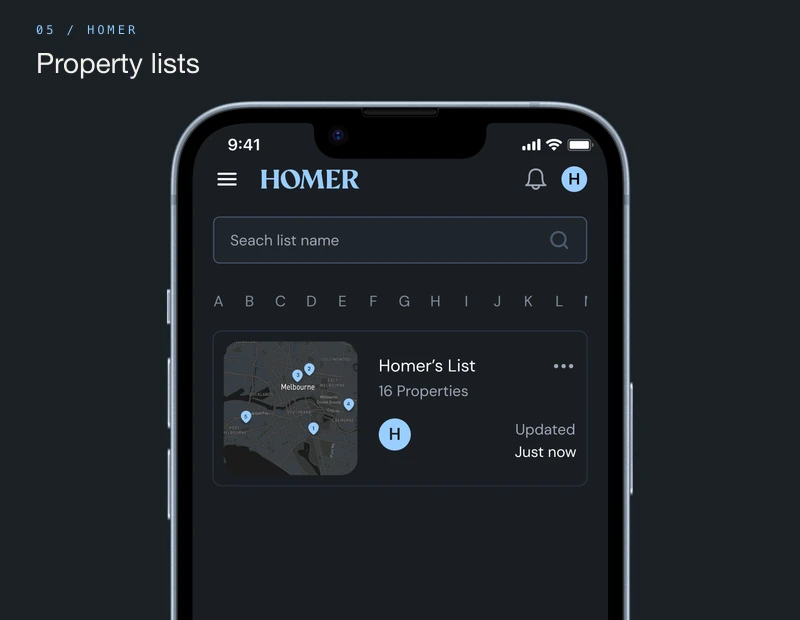
I built the Homer app from scratch in React Native and Expo, and took it through to iOS and Android. Architecture, the release pipeline and actually getting it out were the same job.
We moved the way a small team has to. I’d sit with founders, product and design, turn a call into something on a phone, and ship it. EAS ran OTA and the pipeline. A TypeScript BFF with tRPC and React Query kept the client from waiting around, with GCP underneath. Push, in-app purchases, auth, subscriptions and analytics were how it became a product people paid for, not a prototype.
The rest was keeping that pace without the codebase falling over: modular architecture, environments, automated builds, store releases, and being around when something broke.
Notes
- B2C proptech in Australia is a hard nut to crack. One would think that a country this property-obsessed would take to decent software that provides real value, but it is a steep hill.
- B2B is somewhat easier, if one can efficiently show value to property-adjacent professionals. Homer is primarily built to serve buyers’ agents.
- Showing value to the user fast is extremely valuable. Do not dilly-dally around lengthy onboarding flows and gathering context. That can come later. The user needs to be hooked first.
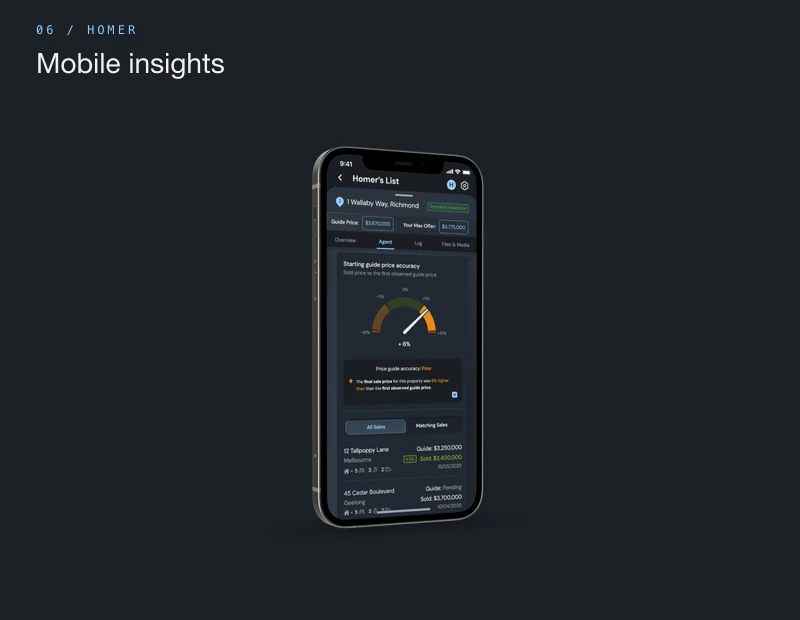
- I am a huge fan of bottom-sheet (modal) UI to show content while preserving as much context as possible. Homer’s mobile app is information-dense, with a lot of data on a relatively small screen. That can overwhelm people. Bottom sheets helped immensely: the screen underneath stays put, so you keep spatial continuity instead of being thrown onto a new page and losing your place.
- A monorepo should be the first instinct from an engineering point of view when a lot of UI is shared across the web and mobile products. It also provides good DX.
Under the hood
React Native · Expo · TypeScript · tRPC · GCP · Stripe · Zustand · EAS · Node
Artefacts